My home, my castle?
And how does it make you feel?
Our home is more than a building. It is a place of retreat, security and regeneration. But does its design really convey what we want it to express?
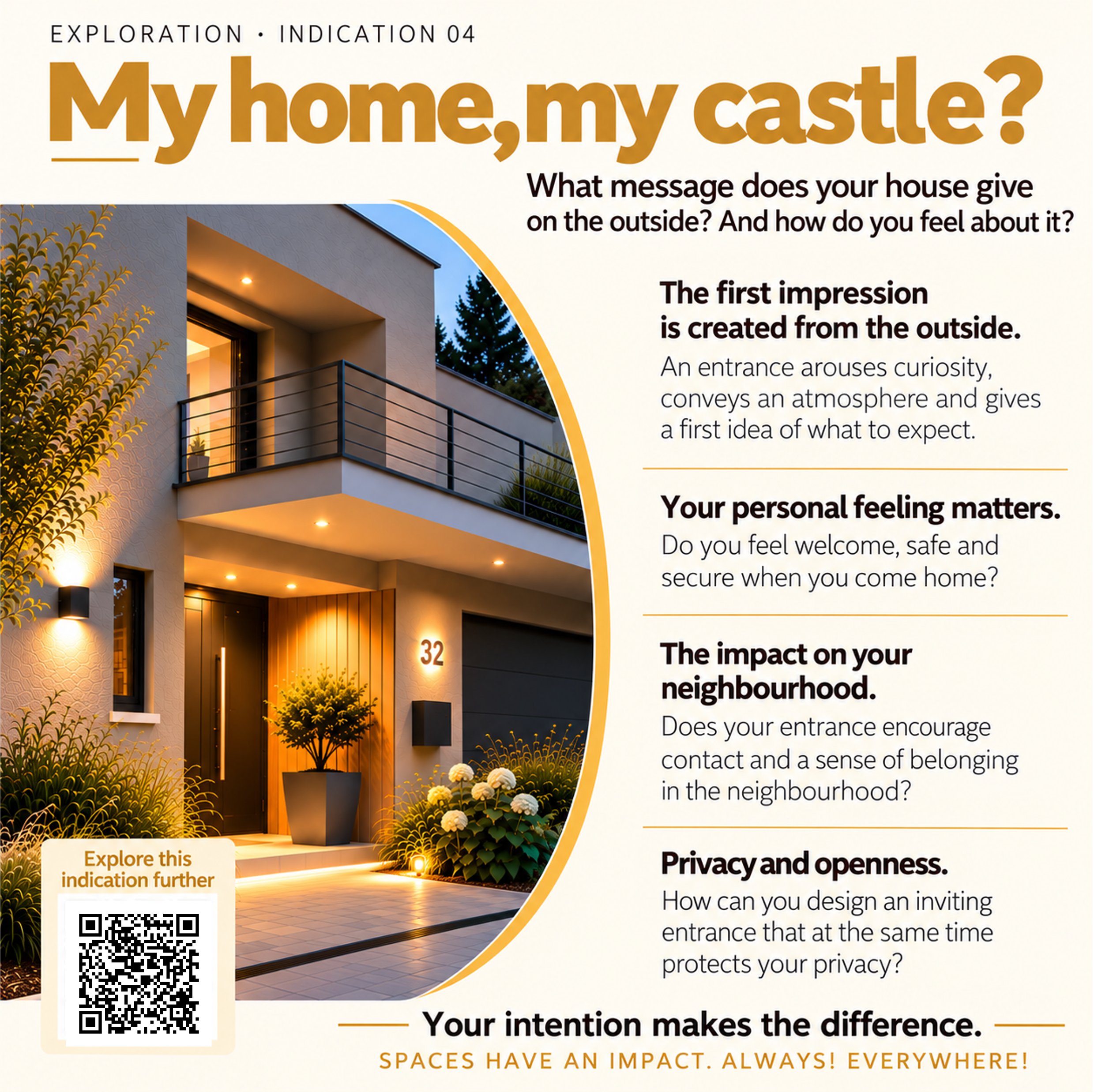
A house speaks. Even without words.
Before we even enter a building, we perceive its effect. The façade, the path to the front door, the lighting and the design of the entrance create a first impression.
Some houses appear open and welcoming, while others seem reserved or clearly separated from their surroundings. This impression arises whether or not it was consciously intended.
But does an entrance that appears unwelcoming automatically mean that its design is unsuitable?
No. Someone who deliberately wants a protected retreat may be seeking precisely that impression. What matters is whether the spatial effect matches the needs of the people who live there.

Three perspectives on the same house
A building is not experienced in the same way by everyone. What feels like security to one person may appear isolating to another.
The outward impression
What message does the house convey? Does it appear open, reserved or protective? And does this impression reflect the intentions of its residents?
The resident’s experience
How do I feel when I come home? Safe and secure? Happy and relaxed? Or perhaps distant and isolated?
The neighbourhood’s perspective
How does the building relate to its surroundings? Does its design encourage a sense of belonging, or does it mainly communicate separation?
What changes when we redesign the entrance?
Three variations of the same house show how lighting, pathways, plants and the emphasis placed on the entrance can change its overall impression.
First, look at the images without reading our descriptions. Which house appeals to you? And which one would best match your personal need for protection and openness?
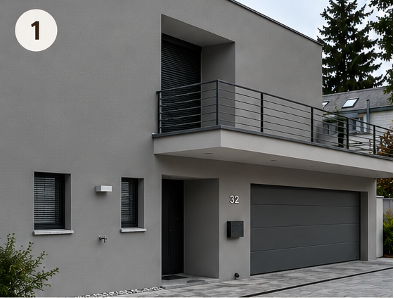
Retreat and distance
The entrance lies in shadow. The closed façade and restrained design convey privacy and separation.
For one resident, this may be exactly the protected space they are looking for. Another person may experience the same situation as unwelcoming or isolating.
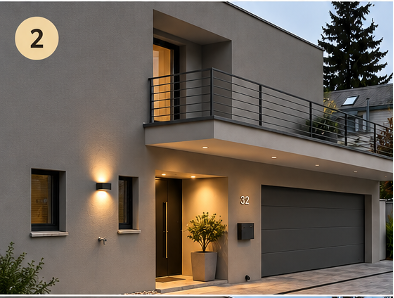
A first step
Lighting and selected design elements make the entrance easier to recognise. Orientation becomes easier without significantly changing the building’s reserved overall character.
Even small changes can create a friendlier welcome. Whether this is enough depends on the wishes of the residents.
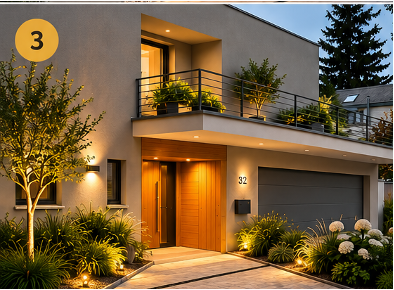
Welcome and connection
The pathway leads clearly towards the front door. Warm lighting, plants and a thoughtfully designed entrance area give the entrance greater presence.
The house may therefore appear more open and welcoming. At the same time, the private living area remains protected and clearly separated from public space.
How much protection do we need to feel secure?
Our personal need for security is not the same for everyone.
For some people, a protected home means peace and quiet, clear boundaries and as little visibility from outside as possible.
Others find a connection with their surroundings, daylight and a more open design pleasant and supportive.
Our stage of life, personal experiences and the way we use our rooms also influence how much privacy we need.
A home should therefore not be designed according to a universal ideal of openness or enclosure, but according to the needs of the people living there.
A welcoming front door does not have to reveal everything.
The entrance to a home is a threshold. It is where public space meets private life.
Glass panels beside a front door can bring daylight into the entrance area and create an impression of openness. Depending on their position and transparency, however, they may also allow unwanted views into the home.
Particularly when the entrance leads directly into private living spaces, this may conflict with the desire for a protected retreat.
A closed entrance door with wooden panels can provide greater privacy. Combined with friendly lighting, a clearly defined pathway and a pleasant design of the entrance area, it can still create a welcoming arrival.
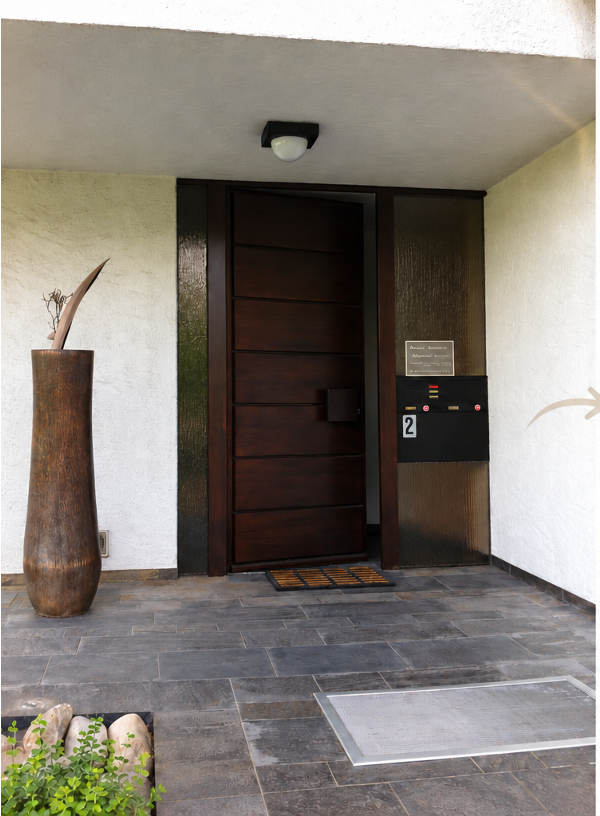
An entrance that creates distance
The dark design and recessed entrance suggest retreat. Whether this creates a sense of protection and security or an unwelcoming impression depends on the perception and needs of the residents.
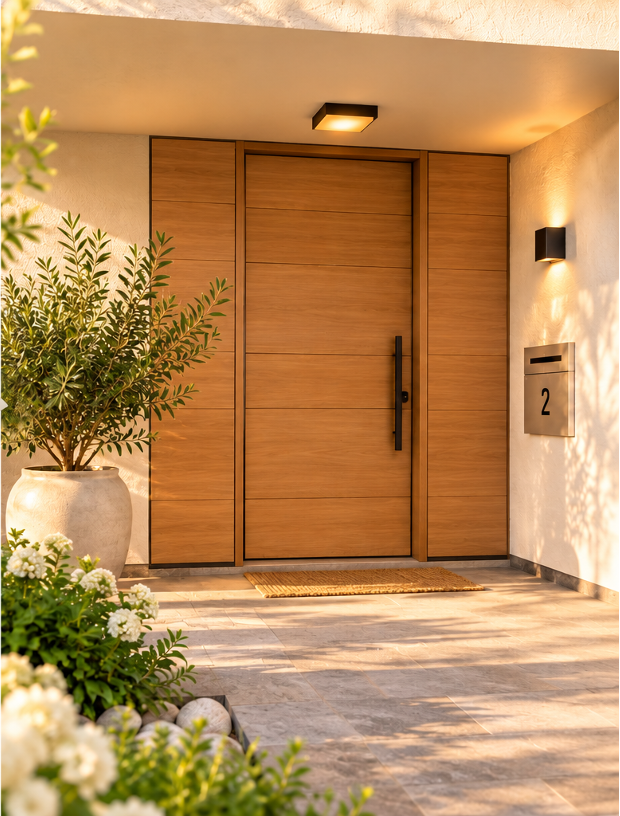
A welcome with privacy
Wood, lighting and plants create a friendlier atmosphere. The closed entrance door prevents direct views into the home and preserves the boundary between public and private space.
From a place of protection to a place of strength
A home should offer more than protection. It should also give us the opportunity to slow down, recover and regain our strength.
A protected retreat can be an important foundation for this. Yet protection alone does not turn a house into a place that strengthens us.
What matters is how we actually experience our surroundings. Do we feel welcome when we come home? Can we relax? Do we experience a sense of security without feeling cut off from the world around us?
The answers may be different for every individual. This is why good design does not begin with a predetermined ideal image, but with an understanding of people’s needs and the intended use of their spaces.
Look at your home’s entrance through different eyes.
Take a moment to look at your home from a visitor’s perspective – and then from your own.
What message does my home convey to the outside world – and does it reflect my intentions?
How do I feel when I come home? Do I look forward to returning to my own private retreat?
Does my home offer the privacy I need to relax and recover?
What could I change so that my home supports me even better?
Your intention makes the difference.
Not every open design feels welcoming. Not every closed design feels uninviting.
The essential question is whether your home creates the effect you want it to have – both on the outside world and on yourself.