Understanding the Clues
Everything is in resonance.
Noticing the clues is only the beginning.
What matters is what we do with them.
Spaces provide clues to the way they affect us. Exploration is about recognising and understanding these connections – so that we can change what works against the intended purpose of a space and strengthen what supports it.
Observe. Understand. Act with purpose.
Buildings are created for a specific purpose.
A home should provide a place to live, to retreat and to recover. A company needs spaces that support focused work, communication and development. A practice, hotel, school or public space fulfils different purposes again.
Architecture and building design create the spatial and functional conditions for these purposes. Art integrated into a building can enrich the architecture, create accents and strengthen its aesthetic expression.
Feng Shui works at a different level: it strengthens the original intended purpose of a building.
What purpose does this space serve – and how can its spatial design support that purpose in the best possible way?
Strengthening the purpose of a space through spatial design.
Design does more than change how a space looks. What matters is how well it supports the purpose for which it was created.
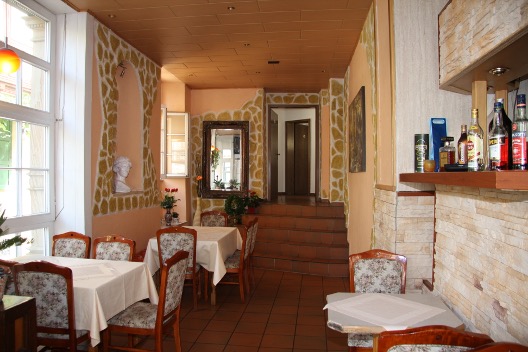
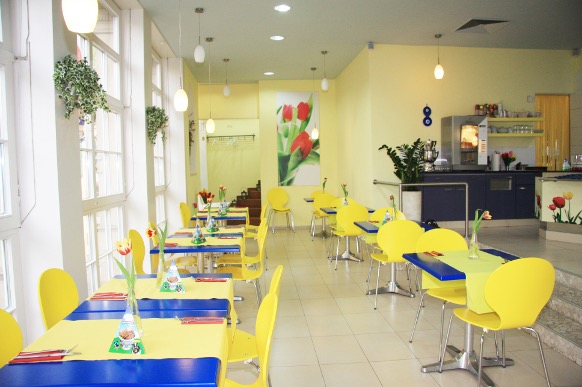
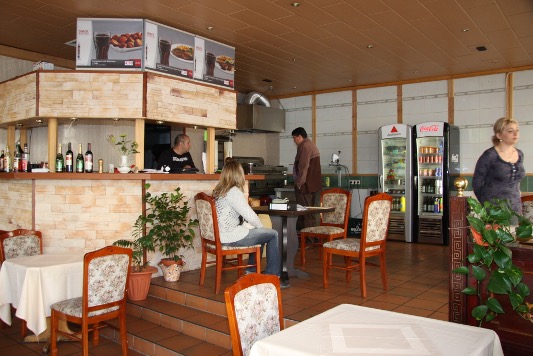
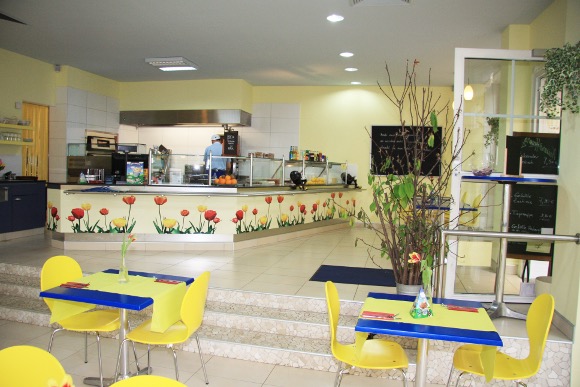
Here, the spatial situation was significantly changed in order to support the existing purpose more effectively. It was not about change for its own sake, but about creating a design that allows the function of the space to be expressed more clearly.
Building, purpose and people are connected.
People are both the initiators and the beneficiaries. They build, design or use a space with expectations of what it should achieve. A bedroom should support rest, a workplace concentration and performance, and a meeting room communication and decision-making.
No building exists in isolation. The site and its surroundings, orientation, floor plan and proportions, materials, circulation routes and functions form an interconnected system. Added to this are the people who created the place, who use it and who approach it with particular expectations.
Everything is connected. Everything is in resonance.
A change in one place can affect other areas. Some relationships are immediately visible. Others only become apparent when we look more closely.
This is where exploration begins: by observing which relationships are present in a particular place, which of them support its intended purpose and where something may work against it.
Sometimes no renovation is needed.
Not every situation calls for structural change. Sometimes it is enough to work purposefully with what is already there.
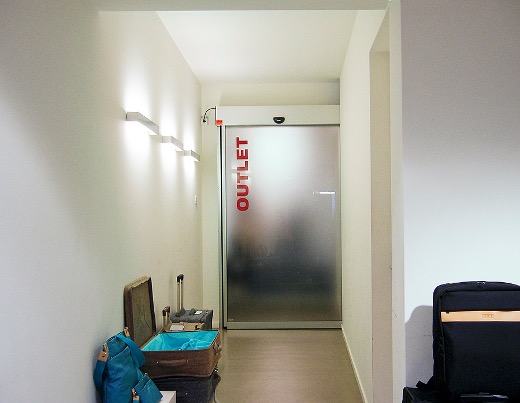
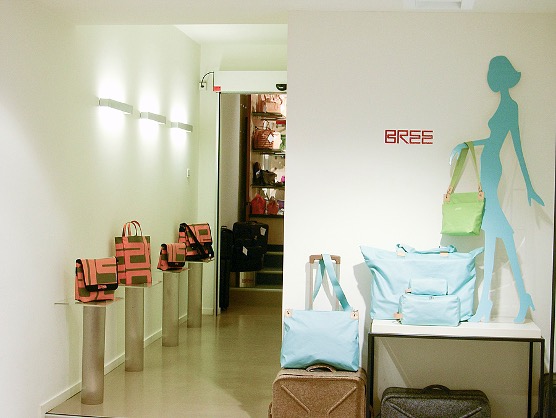
At BREE, neither renovation nor additional investment was necessary. By deliberately reorganising the existing merchandise and focusing the presentation on the goods themselves, attention was directed towards what this space is ultimately about: the product.
Two situations. Two different solutions. That is precisely why my work does not begin with a predetermined method, but with the question of what a space needs in order to fulfil its purpose as effectively as possible.
Every situation requires its own approach.
No two buildings are the same. No two locations are identical. And the task and the desired result are different in every case.
That is why my work follows neither an identical process every time nor a predefined consulting model.
Sometimes the site is the main focus, sometimes the structure of the building or its floor plan. In other cases, the focus may be on individual rooms, workplaces or sleeping areas, disturbance zones, communication spaces or a very specific question.
Which aspects need to be considered and how deeply they need to be explored depends on the task itself.
The right tool for the task.
Over many years, I have developed a toolbox that allows me to work with very different situations.
Classical Feng Shui · Geobiology · Geomancy · Radionics
But not every situation requires every tool. A good toolbox is not defined by using every instrument on every task. What matters is selecting the right tool for the situation at hand.
“I do not use a hammer when a pair of pliers is needed.”
The method does not determine the consultation.
The task determines the method.
The tools selected depend on the building, its intended purpose, the specific situation and the result that is to be achieved.
Explore the tools →Understand first. Then define the framework.
This approach makes every consultation personal and individual.
That is why the process begins with an Initial Consultation. We first clarify the task: What should be achieved? What purpose does the space or building serve? What effects are already being noticed? And what kind of spatial support is being sought?
Only then does the appropriate approach become clear.
Together, we define the framework for our collaboration: the task, the approach, the scope of work and the fee.
There are therefore no standardised consulting packages and no general price list. The scope of the consultation is not assigned to a predefined model in advance. Instead, it is developed from the actual task and agreed transparently before the work begins.
In this way, every situation receives exactly the level of attention it needs – no more, but no less.
Book an Initial ConsultationSpaces have an impact. Always! Everywhere!
The essential question is not whether a space has an impact.
The question is how it has an impact – and whether that impact supports the purpose for which it was created.
For me, this is the role of Feng Shui: to recognise connections, to understand their effects and to support spaces in fulfilling their original purpose as effectively as possible.
And ultimately, it is the people who live, work and act within them who benefit.